
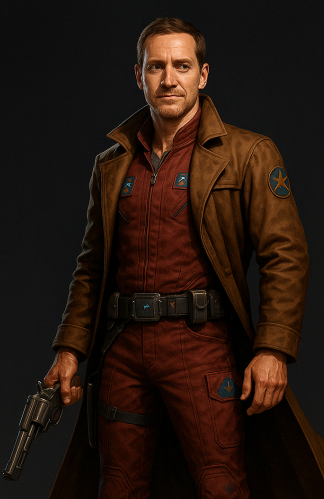


Jake Steele was born in 2017. He was raised on a rural farm by a hardworking and deeply religious family with a history of military service. His upbringing emphasized discipline, manual labor, and personal responsibility, instilling in him a strong work ethic from a young age.
As a child, Steele developed a quiet and serious disposition. He spent much of his time tending livestock and maintaining farm equipment, experiences that later contributed to his mechanical aptitude and calm under pressure. His family practiced Protestant Christianity, and while his early faith was more cultural than personal, the values of order, duty, and sacrifice became central to his identity.
Motivated by a desire to protect others and a growing conviction that the world was on the brink of collapse, Steele left home as a young adult. He believed it was his responsibility to serve, and that real change required action. This sense of duty would guide the next phase of his life, shaping the soldier and leader he would later become.
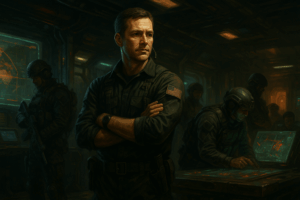
Jake Steele began his military service in the early 2030s, enlisting in a frontline combat unit during the global conflicts that would eventually erupt into World War III. Known for his discipline, technical proficiency, and strong moral bearing, he advanced quickly through infantry and special operations training. During his early service, Steele demonstrated a rare ability to stay calm under fire and to weigh decisions with precision, a quality that made him particularly effective in complex, unpredictable operations.
Over the following years, Steele served in a special forces unit, where he gained extensive combat experience in urban warfare, close-quarters engagements, and high-value target elimination. While his methodical nature occasionally earned remarks from peers for being overly cautious, it was generally seen as a stabilizing trait, one that minimized unnecessary risk and preserved team integrity during prolonged engagements. His leadership style was defined by restraint, control, and an intense focus on responsibility for those under his command.
By his late twenties, Steele was selected for a black operations team, participating in classified missions including sabotage, strategic assassinations, and covert extractions. His calm judgment, discretion, and moral discipline made him a natural candidate for intelligence work, and he was soon recruited into the CIA. There, he operated in denied environments under false identities, conducting covert assignments with minimal support. His training expanded to include foreign weapons handling, clandestine communications, and irregular warfare. His thoughtful, deliberate approach was well-suited to long-term infiltration and high-risk operations where collateral damage was not an option.
At age thirty-six, Steele led a Ground Branch team on a classified mission targeting a senior Eastern Coalition military official. While the assassination itself succeeded, the team became compromised during exfiltration. Faced with a rapidly deteriorating situation, Steele hesitated to order a high-risk breakout maneuver, one that may have required sacrificing himself to ensure the team’s escape. That moment of hesitation allowed enemy forces to close in. His entire team was killed. Steele was the sole survivor, escaping the area shortly before the nuclear bombardment that followed. Following the mission, and surviving the nuclear bombs, he escaped into space and remained off-grid in the years immediately after the war.
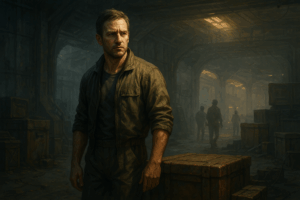
Following the end of World War III, Steele drifted between Earth stations and Lunar colonies, working under assumed names and taking short-term security, cargo, and engineering jobs. During this time, he avoided political affiliations and showed little interest in returning to structured command, operating instead as an independent contractor.
Jake struggled with symptoms of post-traumatic stress and survivor’s guilt related to the classified operation that ended his military career. Though largely isolated, he became known as a quiet but capable man. It was during this period that he encountered the freighter Valiant, a civilian cargo ship operating without formal registry.
Aboard the Valiant, Steele found stability for the first time since the war. There he refined his leadership skills and suppressed his personal demons through mentorship and religion, adopting a belief system that became central to his postwar identity. Though not initially religious in the traditional sense, Steele adopted a disciplined interpretation of Biblical ethics, using it as both a moral framework and personal discipline to manage the weight of his past.
The exact details surrounding his transition from crew member to captain of the Valiant remain unclear, though by 2059, Steele had assumed full command of the vessel.
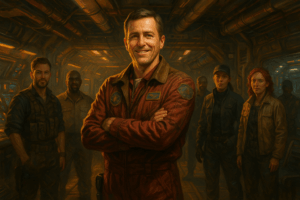
Jake Steele is currently the commander of the Valiant, a long-range freighter operating independently in the Solar System. Steele accepts jobs where he can find them and uses the civilian ship to offer safe passage, cargo transport, and limited support across unstable sectors.
Under Steele’s leadership, the Valiant is a haven for displaced persons, former combatants, and those seeking refuge from postwar collapse. He runs a disciplined command structure with clear expectations, maintaining operational efficiency while fostering loyalty among his crew. Though his command style is often described as strict and emotionally reserved, Steele is known to protect his crew with unwavering resolve.
He governs according to his personal moral code, often applying ethical constraints to situations that place him at odds with pragmatic or self-serving choices. His decisions consistently reflect a preference for non-lethal outcomes and a commitment to principle, even when doing so complicates survival or mission objectives.
Steele rarely discusses his past and actively deflects questions about his background, contributing to his reputation as a guarded and enigmatic figure. Despite this, he earns widespread respect within colonies and independent ports, where the Valiant is regarded as a reliable, if unconventional, operator.
Commanding the Valiant represents Steele’s attempt to build something enduring in the aftermath of destruction. Though he often presents himself as a simple freighter captain, his leadership reflects a deeper purpose: protecting his crew, upholding his values, and preserving a sliver of order in a lawless system.
Jake Steele was born in 2017. He was raised on a rural farm by a hardworking and deeply religious family with a history of military service. His upbringing emphasized discipline, manual labor, and personal responsibility, instilling in him a strong work ethic from a young age.
As a child, Steele developed a quiet and serious disposition. He spent much of his time tending livestock and maintaining farm equipment, experiences that later contributed to his mechanical aptitude and calm under pressure. His family practiced Protestant Christianity, and while his early faith was more cultural than personal, the values of order, duty, and sacrifice became central to his identity.
Motivated by a desire to protect others and a growing conviction that the world was on the brink of collapse, Steele left home as a young adult. He believed it was his responsibility to serve, and that real change required action. This sense of duty would guide the next phase of his life, shaping the soldier and leader he would later become.
Jake Steele began his military service in the early 2030s, enlisting in a frontline combat unit during the global conflicts that would eventually erupt into World War III. Known for his discipline, technical proficiency, and strong moral bearing, he advanced quickly through infantry and special operations training. During his early service, Steele demonstrated a rare ability to stay calm under fire and to weigh decisions with precision, a quality that made him particularly effective in complex, unpredictable operations.
Over the following years, Steele served in a special forces unit, where he gained extensive combat experience in urban warfare, close-quarters engagements, and high-value target elimination. While his methodical nature occasionally earned remarks from peers for being overly cautious, it was generally seen as a stabilizing trait, one that minimized unnecessary risk and preserved team integrity during prolonged engagements. His leadership style was defined by restraint, control, and an intense focus on responsibility for those under his command.
By his late twenties, Steele was selected for a black operations team, participating in classified missions including sabotage, strategic assassinations, and covert extractions. His calm judgment, discretion, and moral discipline made him a natural candidate for intelligence work, and he was soon recruited into the CIA. There, he operated in denied environments under false identities, conducting covert assignments with minimal support. His training expanded to include foreign weapons handling, clandestine communications, and irregular warfare. His thoughtful, deliberate approach was well-suited to long-term infiltration and high-risk operations where collateral damage was not an option.
At age thirty-six, Steele led a Ground Branch team on a classified mission targeting a senior Eastern Coalition military official. While the assassination itself succeeded, the team became compromised during exfiltration. Faced with a rapidly deteriorating situation, Steele hesitated to order a high-risk breakout maneuver, one that may have required sacrificing himself to ensure the team’s escape. That moment of hesitation allowed enemy forces to close in. His entire team was killed. Steele was the sole survivor, escaping the area shortly before the nuclear bombardment that followed. Following the mission, and surviving the nuclear bombs, he escaped into space and remained off-grid in the years immediately after the war.
Following the end of World War III, Steele drifted between Earth stations and Lunar colonies, working under assumed names and taking short-term security, cargo, and engineering jobs. During this time, he avoided political affiliations and showed little interest in returning to structured command, operating instead as an independent contractor.
Jake struggled with symptoms of post-traumatic stress and survivor’s guilt related to the classified operation that ended his military career. Though largely isolated, he became known as a quiet but capable man. It was during this period that he encountered the freighter Valiant, a civilian cargo ship operating without formal registry.
Aboard the Valiant, Steele found stability for the first time since the war. There he refined his leadership skills and suppressed his personal demons through mentorship and religion, adopting a belief system that became central to his postwar identity. Though not initially religious in the traditional sense, Steele adopted a disciplined interpretation of Biblical ethics, using it as both a moral framework and personal discipline to manage the weight of his past.
The exact details surrounding his transition from crew member to captain of the Valiant remain unclear, though by 2059, Steele had assumed full command of the vessel.
Jake Steele is currently the commander of the Valiant, a long-range freighter operating independently in the Solar System. Steele accepts jobs where he can find them and uses the civilian ship to offer safe passage, cargo transport, and limited support across unstable sectors.
Under Steele’s leadership, the Valiant is a haven for displaced persons, former combatants, and those seeking refuge from postwar collapse. He runs a disciplined command structure with clear expectations, maintaining operational efficiency while fostering loyalty among his crew. Though his command style is often described as strict and emotionally reserved, Steele is known to protect his crew with unwavering resolve.
He governs according to his personal moral code, often applying ethical constraints to situations that place him at odds with pragmatic or self-serving choices. His decisions consistently reflect a preference for non-lethal outcomes and a commitment to principle, even when doing so complicates survival or mission objectives.
Steele rarely discusses his past and actively deflects questions about his background, contributing to his reputation as a guarded and enigmatic figure. Despite this, he earns widespread respect within colonies and independent ports, where the Valiant is regarded as a reliable, if unconventional, operator.
Commanding the Valiant represents Steele’s attempt to build something enduring in the aftermath of destruction. Though he often presents himself as a simple freighter captain, his leadership reflects a deeper purpose: protecting his crew, upholding his values, and preserving a sliver of order in a lawless system.
Jake Steele was born in 2017. He was raised on a rural farm by a hardworking and deeply religious family with a history of military service. His upbringing emphasized discipline, manual labor, and personal responsibility, instilling in him a strong work ethic from a young age.
As a child, Steele developed a quiet and serious disposition. He spent much of his time tending livestock and maintaining farm equipment, experiences that later contributed to his mechanical aptitude and calm under pressure. His family practiced Protestant Christianity, and while his early faith was more cultural than personal, the values of order, duty, and sacrifice became central to his identity.
Motivated by a desire to protect others and a growing conviction that the world was on the brink of collapse, Steele left home as a young adult. He believed it was his responsibility to serve, and that real change required action. This sense of duty would guide the next phase of his life, shaping the soldier and leader he would later become.
Jake Steele began his military service in the early 2030s, enlisting in a frontline combat unit during the global conflicts that would eventually erupt into World War III. Known for his discipline, technical proficiency, and strong moral bearing, he advanced quickly through infantry and special operations training. During his early service, Steele demonstrated a rare ability to stay calm under fire and to weigh decisions with precision, a quality that made him particularly effective in complex, unpredictable operations.
Over the following years, Steele served in a special forces unit, where he gained extensive combat experience in urban warfare, close-quarters engagements, and high-value target elimination. While his methodical nature occasionally earned remarks from peers for being overly cautious, it was generally seen as a stabilizing trait, one that minimized unnecessary risk and preserved team integrity during prolonged engagements. His leadership style was defined by restraint, control, and an intense focus on responsibility for those under his command.
By his late twenties, Steele was selected for a black operations team, participating in classified missions including sabotage, strategic assassinations, and covert extractions. His calm judgment, discretion, and moral discipline made him a natural candidate for intelligence work, and he was soon recruited into the CIA. There, he operated in denied environments under false identities, conducting covert assignments with minimal support. His training expanded to include foreign weapons handling, clandestine communications, and irregular warfare. His thoughtful, deliberate approach was well-suited to long-term infiltration and high-risk operations where collateral damage was not an option.
At age thirty-six, Steele led a Ground Branch team on a classified mission targeting a senior Eastern Coalition military official. While the assassination itself succeeded, the team became compromised during exfiltration. Faced with a rapidly deteriorating situation, Steele hesitated to order a high-risk breakout maneuver, one that may have required sacrificing himself to ensure the team’s escape. That moment of hesitation allowed enemy forces to close in. His entire team was killed. Steele was the sole survivor, escaping the area shortly before the nuclear bombardment that followed. Following the mission, and surviving the nuclear bombs, he escaped into space and remained off-grid in the years immediately after the war.
Following the end of World War III, Steele drifted between Earth stations and Lunar colonies, working under assumed names and taking short-term security, cargo, and engineering jobs. During this time, he avoided political affiliations and showed little interest in returning to structured command, operating instead as an independent contractor.
Jake struggled with symptoms of post-traumatic stress and survivor’s guilt related to the classified operation that ended his military career. Though largely isolated, he became known as a quiet but capable man. It was during this period that he encountered the freighter Valiant, a civilian cargo ship operating without formal registry.
Aboard the Valiant, Steele found stability for the first time since the war. There he refined his leadership skills and suppressed his personal demons through mentorship and religion, adopting a belief system that became central to his postwar identity. Though not initially religious in the traditional sense, Steele adopted a disciplined interpretation of Biblical ethics, using it as both a moral framework and personal discipline to manage the weight of his past.
The exact details surrounding his transition from crew member to captain of the Valiant remain unclear, though by 2059, Steele had assumed full command of the vessel.
Jake Steele is currently the commander of the Valiant, a long-range freighter operating independently in the Solar System. Steele accepts jobs where he can find them and uses the civilian ship to offer safe passage, cargo transport, and limited support across unstable sectors.
Under Steele’s leadership, the Valiant is a haven for displaced persons, former combatants, and those seeking refuge from postwar collapse. He runs a disciplined command structure with clear expectations, maintaining operational efficiency while fostering loyalty among his crew. Though his command style is often described as strict and emotionally reserved, Steele is known to protect his crew with unwavering resolve.
He governs according to his personal moral code, often applying ethical constraints to situations that place him at odds with pragmatic or self-serving choices. His decisions consistently reflect a preference for non-lethal outcomes and a commitment to principle, even when doing so complicates survival or mission objectives.
Steele rarely discusses his past and actively deflects questions about his background, contributing to his reputation as a guarded and enigmatic figure. Despite this, he earns widespread respect within colonies and independent ports, where the Valiant is regarded as a reliable, if unconventional, operator.
Commanding the Valiant represents Steele’s attempt to build something enduring in the aftermath of destruction. Though he often presents himself as a simple freighter captain, his leadership reflects a deeper purpose: protecting his crew, upholding his values, and preserving a sliver of order in a lawless system.
Jake Steele was born in 2017. He was raised on a rural farm by a hardworking and deeply religious family with a history of military service. His upbringing emphasized discipline, manual labor, and personal responsibility, instilling in him a strong work ethic from a young age.
As a child, Steele developed a quiet and serious disposition. He spent much of his time tending livestock and maintaining farm equipment, experiences that later contributed to his mechanical aptitude and calm under pressure. His family practiced Protestant Christianity, and while his early faith was more cultural than personal, the values of order, duty, and sacrifice became central to his identity.
Motivated by a desire to protect others and a growing conviction that the world was on the brink of collapse, Steele left home as a young adult. He believed it was his responsibility to serve, and that real change required action. This sense of duty would guide the next phase of his life, shaping the soldier and leader he would later become.
Jake Steele began his military service in the early 2030s, enlisting in a frontline combat unit during the global conflicts that would eventually erupt into World War III. Known for his discipline, technical proficiency, and strong moral bearing, he advanced quickly through infantry and special operations training. During his early service, Steele demonstrated a rare ability to stay calm under fire and to weigh decisions with precision, a quality that made him particularly effective in complex, unpredictable operations.
Over the following years, Steele served in a special forces unit, where he gained extensive combat experience in urban warfare, close-quarters engagements, and high-value target elimination. While his methodical nature occasionally earned remarks from peers for being overly cautious, it was generally seen as a stabilizing trait, one that minimized unnecessary risk and preserved team integrity during prolonged engagements. His leadership style was defined by restraint, control, and an intense focus on responsibility for those under his command.
By his late twenties, Steele was selected for a black operations team, participating in classified missions including sabotage, strategic assassinations, and covert extractions. His calm judgment, discretion, and moral discipline made him a natural candidate for intelligence work, and he was soon recruited into the CIA. There, he operated in denied environments under false identities, conducting covert assignments with minimal support. His training expanded to include foreign weapons handling, clandestine communications, and irregular warfare. His thoughtful, deliberate approach was well-suited to long-term infiltration and high-risk operations where collateral damage was not an option.
At age thirty-six, Steele led a Ground Branch team on a classified mission targeting a senior Eastern Coalition military official. While the assassination itself succeeded, the team became compromised during exfiltration. Faced with a rapidly deteriorating situation, Steele hesitated to order a high-risk breakout maneuver, one that may have required sacrificing himself to ensure the team’s escape. That moment of hesitation allowed enemy forces to close in. His entire team was killed. Steele was the sole survivor, escaping the area shortly before the nuclear bombardment that followed. Following the mission, and surviving the nuclear bombs, he escaped into space and remained off-grid in the years immediately after the war.
Following the end of World War III, Steele drifted between Earth stations and Lunar colonies, working under assumed names and taking short-term security, cargo, and engineering jobs. During this time, he avoided political affiliations and showed little interest in returning to structured command, operating instead as an independent contractor.
Jake struggled with symptoms of post-traumatic stress and survivor’s guilt related to the classified operation that ended his military career. Though largely isolated, he became known as a quiet but capable man. It was during this period that he encountered the freighter Valiant, a civilian cargo ship operating without formal registry.
Aboard the Valiant, Steele found stability for the first time since the war. There he refined his leadership skills and suppressed his personal demons through mentorship and religion, adopting a belief system that became central to his postwar identity. Though not initially religious in the traditional sense, Steele adopted a disciplined interpretation of Biblical ethics, using it as both a moral framework and personal discipline to manage the weight of his past.
The exact details surrounding his transition from crew member to captain of the Valiant remain unclear, though by 2059, Steele had assumed full command of the vessel.
Jake Steele is currently the commander of the Valiant, a long-range freighter operating independently in the Solar System. Steele accepts jobs where he can find them and uses the civilian ship to offer safe passage, cargo transport, and limited support across unstable sectors.
Under Steele’s leadership, the Valiant is a haven for displaced persons, former combatants, and those seeking refuge from postwar collapse. He runs a disciplined command structure with clear expectations, maintaining operational efficiency while fostering loyalty among his crew. Though his command style is often described as strict and emotionally reserved, Steele is known to protect his crew with unwavering resolve.
He governs according to his personal moral code, often applying ethical constraints to situations that place him at odds with pragmatic or self-serving choices. His decisions consistently reflect a preference for non-lethal outcomes and a commitment to principle, even when doing so complicates survival or mission objectives.
Steele rarely discusses his past and actively deflects questions about his background, contributing to his reputation as a guarded and enigmatic figure. Despite this, he earns widespread respect within colonies and independent ports, where the Valiant is regarded as a reliable, if unconventional, operator.
Commanding the Valiant represents Steele’s attempt to build something enduring in the aftermath of destruction. Though he often presents himself as a simple freighter captain, his leadership reflects a deeper purpose: protecting his crew, upholding his values, and preserving a sliver of order in a lawless system.
 English
  한국어
한국어